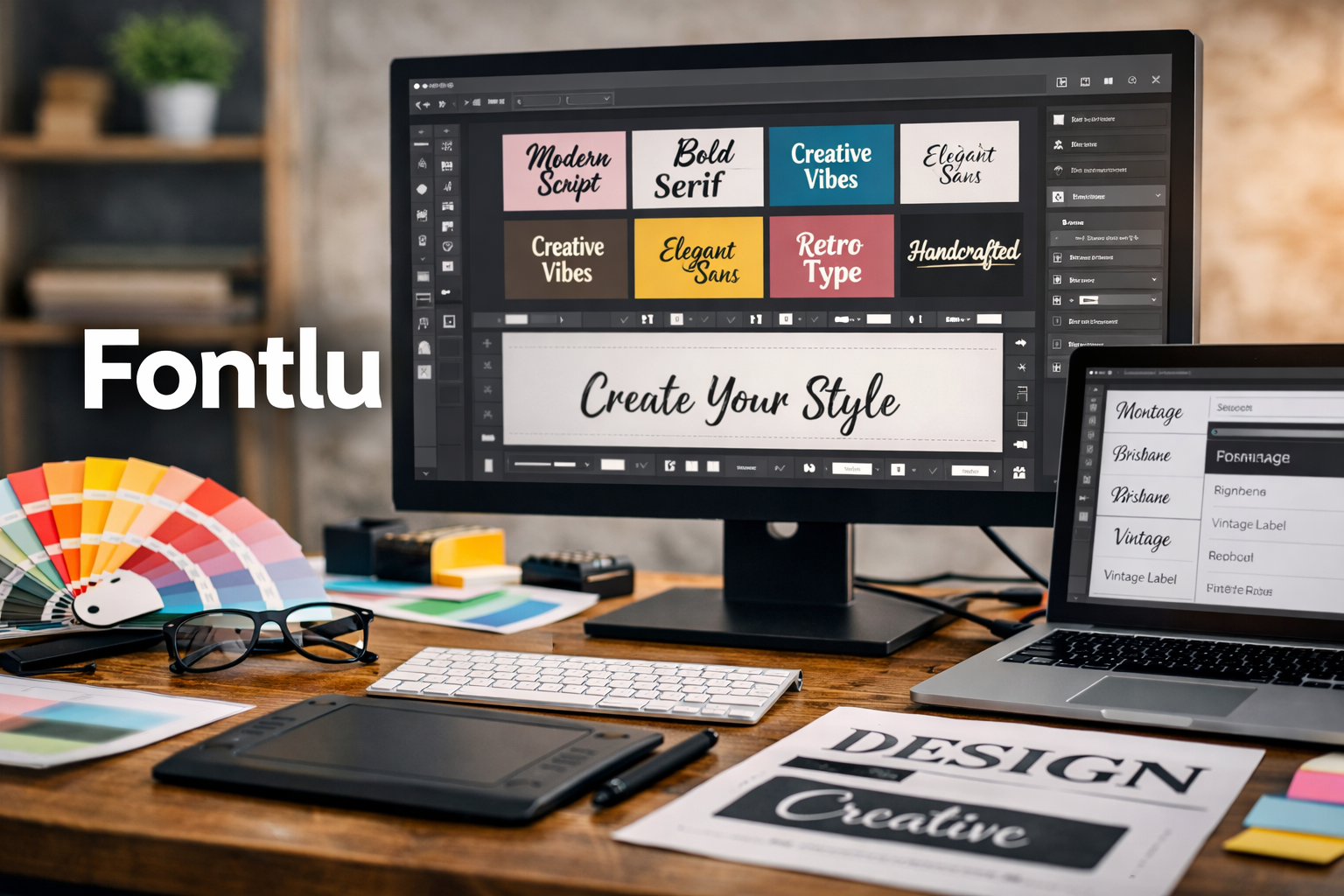
Fontlu
Typography is the silent ambassador of your brand. It speaks before your audience reads a single word, setting the tone for everything that follows. Yet for most creative teams, managing fonts remains an organizational headache rather than a strategic advantage. Files scatter across drives, license agreements get lost in email threads, and that perfect typeface you used six months ago vanishes into digital oblivion.
This is where Fontlu enters the picture—not as another flashy design tool, but as a practical solution to a problem that grows more complex as teams scale. Whether you’re a solo designer juggling multiple clients or an agency managing brand consistency across dozens of projects, understanding how Fontlu works could transform your relationship with typography.
What Is Fontlu and Why Does Typography Management Matter?
Fontlu is a digital typography platform built to centralize, organize, and streamline how creative professionals work with fonts. At its core, it functions as a bridge between the chaotic reality of font files scattered across personal folders, cloud storage, and design software libraries, and the organized, accessible system that modern workflows demand .
Unlike traditional font repositories that simply offer download access, Fontlu treats typography as a managed asset class. It provides structure, visibility, and accountability—three elements that become increasingly critical as teams grow and projects multiply.
The Hidden Complexity of Digital Fonts
The modern design environment has quietly created a font management crisis. Consider what a typical creative team juggles today: dozens of typefaces across multiple projects, each with varying weights, styles, and licensing restrictions. Some fonts are free for commercial use; others require specific licensing for web versus print applications. Remote work has only amplified this complexity, with designers, developers, and marketers collaborating from different locations and devices
.
The cost of this chaos isn’t immediately obvious, but it accumulates quickly. Designers waste hours hunting for the right file version. Developers implement fonts in code only to discover the design team used a different weight. Marketing materials go live with unlicensed typefaces, creating legal exposure. These aren’t dramatic failures—they’re the slow erosion of efficiency and brand integrity that happens when typography lacks proper infrastructure.
How Fontlu Addresses the Chaos
Fontlu approaches this problem by reframing font handling as part of broader design operations rather than an afterthought. The platform creates a single source of truth where approved fonts live with clear usage guidelines, licensing information, and version control. This doesn’t eliminate creative freedom; it creates guardrails that protect the brand while allowing it to evolve
The philosophy behind Fontlu reflects a broader shift in how companies view design. As design becomes more strategic and embedded throughout product development and marketing, the tools supporting it must evolve beyond simple asset storage. Fontlu represents this evolution by addressing an unglamorous but essential layer of design infrastructure
Core Features That Set Fontlu Apart
Understanding Fontlu’s value requires looking beyond feature lists to see how those capabilities solve real workflow problems. The platform combines several interconnected tools that work together to create a cohesive typography ecosystem.
Centralized Font Library and Organization
Fontlu’s foundation is its extensive font library, which spans multiple categories to meet diverse design needs. The collection includes traditional serif and sans-serif options for professional layouts, script and handwritten fonts for personal branding, display fonts for bold headlines, and variable fonts that offer flexibility in weight and width adjustments
What distinguishes this library from free alternatives is the curation and organization. Fonts aren’t just dumped into a searchable database—they’re categorized, tagged, and presented with relevant metadata including licensing terms and usage recommendations. This organization transforms font selection from a time-consuming hunt into a streamlined discovery process.
The platform also allows teams to import their existing font collections, creating a hybrid environment where purchased typefaces, custom fonts, and Fontlu’s native library coexist in one organized system. This addresses the reality that most established designers already have significant font investments and need a management layer, not just new typefaces.
Live Preview and Testing Environment
One of Fontlu’s most practical features is its live preview capability. Rather than installing fonts and testing them in design software, users can see how text renders in different typefaces instantly within the platform. This includes adjustable parameters for size, weight, kerning, and letter spacing—allowing precise typographic control before any files are downloaded or installed
The mockup tools extend this preview functionality to real-world applications. Designers can visualize how fonts will appear in marketing materials, website layouts, and mobile interfaces without leaving the platform. This reduces the iterative cycle of download-install-test-reject that consumes so much time in traditional font selection workflows
.
Team Collaboration and Sharing Workflows
Fontlu recognizes that font selection is rarely a solo decision. Designers propose options, creative directors approve them, brand managers verify consistency, and developers implement the final choices. The platform facilitates this collaborative process through sharing features that allow teams to generate links to specific fonts or entire collections
This collaborative approach extends to feedback loops. Team members can comment on font choices, suggest alternatives, and maintain version history of typography decisions. For agencies working with client approval processes, this transparency reduces miscommunication and keeps projects moving forward.
Integration with Design Software
A standalone font manager creates friction if it doesn’t connect with the tools designers actually use. Fontlu addresses this through integrations with popular design platforms including Adobe Creative Cloud (Photoshop, Illustrator, InDesign), Figma, and Sketch. These integrations allow fonts to flow directly from Fontlu into active design projects without manual file management.
For development teams, Fontlu supports web-compatible font formats and provides clear specifications for CSS implementation. This bridge between design and development reduces the translation errors that often occur when designers specify one font weight and developers implement another.
Who Should Use Fontlu?
Fontlu’s value proposition varies depending on your role, team size, and workflow complexity. Understanding where you fit helps determine whether the platform justifies the investment of time and resources.
Freelance Designers and Solo Creators
Individual designers often assume font management tools are overkill for their needs. After all, if you’re the only one using your fonts, how much organization do you really need? The answer depends on your client volume and project diversity.
If you serve multiple clients with distinct brand guidelines, Fontlu becomes valuable quickly. The platform helps maintain separation between client font libraries, ensuring you don’t accidentally use Client A’s custom typeface in Client B’s project. The preview and testing features also speed up the proposal phase, allowing you to present font options to clients without installing anything. For designers who primarily use free fonts from Google Fonts or similar repositories, Fontlu might be unnecessary. The value increases significantly when you’re managing purchased typefaces with specific licensing terms or working with custom fonts provided by clients.
Agency Teams and Collaborative Environments
Agencies represent Fontlu’s sweet spot. The combination of multiple designers, shared clients, and rapid project turnover creates exactly the environment where font chaos thrives. Fontlu provides the infrastructure to maintain consistency across team members while preserving the flexibility needed for diverse client work. The collaboration features become particularly valuable in agency settings. Creative directors can curate approved font palettes for specific clients, junior designers can work within established brand constraints, and account managers can verify that deliverables meet brand standards. This hierarchy of access and approval mirrors how agencies actually operate.
Brand Managers and Marketing Departments
For in-house brand teams, Fontlu serves as a governance tool as much as a creative resource. Brand managers can define approved typography standards, distribute them to internal teams and external vendors, and monitor compliance. This becomes critical for organizations with distributed marketing operations where multiple agencies, freelancers, and internal departments create brand materials. The licensing management features also appeal to legal and procurement teams. Centralized visibility into font licenses, usage rights, and renewal dates reduces the risk of compliance violations that can result from decentralized font purchasing.
Developers and Product Teams
While Fontlu is primarily a design tool, its value extends to development workflows. The platform’s web export features and CSS specifications streamline the handoff process between design and engineering. Developers get clear, implementable font instructions rather than vague references to “use the brand font”. For product teams managing design systems, Fontlu can serve as the typography component of a broader component library. The consistency it enforces in design files translates directly to consistent implementation in production code.
Getting Started with Fontlu: A Practical Walkthrough
Understanding Fontlu’s capabilities is useful, but knowing how to actually implement it in your workflow is what matters. Here’s how to move from account creation to productive use.
Setting Up Your First Project
Begin by creating an account on the Fontlu platform. The registration process requires basic information—email, password, and organization details. Once inside, you’ll encounter the dashboard, which serves as your central command center. The first practical step is creating a project structure that mirrors your actual work. If you’re a freelancer, this might mean separate projects for each active client. If you’re part of an in-house team, projects might correspond to product lines, campaigns, or brand initiatives. This organizational layer determines how you’ll categorize and access fonts going forward.
Importing and Organizing Your Font Collection
If you have existing font files, the next step is importing them into Fontlu. The platform supports standard font formats including TTF, OTF, and WOFF files. During import, you’ll have the opportunity to add metadata—license information, purchase dates, usage restrictions—that becomes searchable later .
For teams, this import process should be coordinated. Decide who has authority to add fonts to the shared library, establish naming conventions, and document any licensing restrictions. This upfront organization prevents the “digital junk drawer” problem that plagues many shared drives.. Once imported, use Fontlu’s tagging and categorization features to create a taxonomy that makes sense for your work. Common approaches include categorizing by client, project type, or font characteristics (serif, sans-serif, display, etc.). The goal is creating a system where any team member can find the right font quickly.
Creating Style Guides and Brand Standards
Fontlu’s utility extends beyond storage into documentation. Use the platform to create style guides that specify which fonts to use for which applications, along with sizing, spacing, and pairing recommendations. These living documents can be shared with team members and updated as brand standards evolve. For client work, these style guides become deliverables that extend the value of your design work. Rather than simply providing font files, you provide a comprehensive typography system with clear implementation guidance.
Real-World Applications and Use Cases
Theory is useful, but seeing how Fontlu functions in practice clarifies its value. Here are specific scenarios where the platform demonstrates its strengths.
Brand Identity Consistency Across Channels
Consider a mid-sized company undergoing a rebrand. Designers are experimenting with new typefaces, developers are implementing updated styles across web and mobile applications, and marketing is rolling out fresh campaigns across social media, print, and email. Without a unified system, inconsistencies emerge almost immediately—a font weight used in the landing page doesn’t match the app interface, or a licensed font gets used in paid advertising beyond its allowed scope
Fontlu addresses this by establishing approved font sets with clear usage guidelines. When the brand team defines that “Brandon Grotesque is approved for headlines only, never body text,” that restriction becomes visible to everyone. When the web team needs implementation specifications, they’re available in formats ready for CSS. When marketing creates social graphics, they work from the same font library as the web team.
Web Design and Development Workflows
Web typography has become increasingly complex with the rise of variable fonts, web font loading strategies, and responsive type scaling. Fontlu supports these modern workflows by providing web-optimized font exports and clear technical specifications.
For design systems, Fontlu can serve as the source of truth for typography tokens. Designers specify fonts in their design files using Fontlu’s library, and developers reference the same typefaces through Fontlu’s export features. This alignment reduces the “it looks different in the browser” problem that frustrates both designers and developers.
Print and Digital Marketing Materials
Despite the digital focus of most modern tools, print design remains significant for many brands. Fontlu supports print workflows through high-quality font exports and mockup tools that simulate real-world print applications.
For marketing teams creating materials across formats, Fontlu’s consistency features ensure that the typeface used in a billboard matches the one in a social media graphic and the website header. This cross-channel consistency strengthens brand recognition and professional appearance.
Social Media and Content Creation
Content creators and social media managers often work outside traditional design workflows, but they still need access to brand-approved typography. Fontlu’s sharing features allow these team members to access curated font selections without needing full design software licenses or technical expertise.
The platform’s preview tools are particularly valuable here—social media managers can see exactly how text will render in different fonts before creating graphics, reducing the cycle of creation and revision.
Fontlu vs. Alternatives: How It Compares
No tool exists in isolation, and understanding Fontlu’s position in the broader typography tool landscape helps determine whether it’s the right choice for your needs.
Adobe Fonts and Creative Cloud Integration
Adobe Fonts (formerly Typekit) comes bundled with Creative Cloud subscriptions, making it the default choice for many designers. The integration with Photoshop, Illustrator, and InDesign is seamless, and the font library is extensive
.
Fontlu differentiates itself through broader workflow integration beyond the Adobe ecosystem. While Adobe Fonts focuses on providing typefaces for design software, Fontlu emphasizes management, organization, and team collaboration. For teams using Figma, Sketch, or web-based design tools, Fontlu often provides better integration. For pure Adobe workflows, the choice depends on whether management features outweigh the convenience of bundled access.
Google Fonts and Free Alternatives
Google Fonts remains the dominant free option for web typography. It’s hard to beat the price point, and the library has grown substantially in quality and variety over the years. Fontlu doesn’t directly compete with free font repositories on price, but on functionality. If your needs are simple—basic web fonts for a straightforward project—Google Fonts is likely sufficient. If you’re managing complex brand typography, custom fonts, or team collaboration, Fontlu’s organizational features justify the cost
.
Standalone Font Management Tools
Tools like FontBase, RightFont, and Suitcase Fusion have addressed font management for years. These tools focus primarily on local font activation and organization—preventing font conflicts and managing large collections.
Fontlu overlaps with these tools in the management layer but extends into cloud-based collaboration and web integration. The choice between Fontlu and traditional font managers often comes down to whether your workflow is primarily local (individual designer working solo) or cloud-based (distributed team collaborating remotely). For the latter, Fontlu’s cloud-native architecture provides advantages that local tools struggle to match.
Limitations and Considerations
Honest evaluation requires acknowledging where Fontlu may not meet every need. Understanding these limitations prevents disappointment and ensures you’re making an informed choice.
When Fontlu Might Not Be the Right Fit
Smaller teams with simple typography needs may find Fontlu’s feature set excessive. If you’re a solo designer working with a handful of Google Fonts on straightforward projects, the organizational overhead of implementing Fontlu may not justify the benefits. The platform’s value compounds with complexity—more team members, more projects, more font licenses, more channels
.
Organizations with highly specialized typography needs—such as publishers working with complex multilingual typefaces or design studios creating custom fonts—may find Fontlu’s feature set too general. The platform excels at management and standardization, not at the specialized needs of type design and extreme typographic customization.
Learning Curve and Team Adoption
Any new tool requires investment in learning and habit formation. Fontlu’s effectiveness depends on consistent use—if team members continue to install fonts locally and ignore the shared library, the platform becomes an expensive empty repository.
Successful implementation requires leadership support and clear internal guidelines. Teams need to understand why they’re using Fontlu and what processes change as a result. Without this change management component, Fontlu risks becoming shelfware—technically present but functionally ignored.
The Future of Typography Management
Fontlu represents a broader trend in design operations: the professionalization of infrastructure that was previously handled ad hoc. As design becomes more central to business strategy, the tools supporting it must mature beyond creative features into operational reliability.The platform’s roadmap includes AI-powered font recommendations, expanded collaboration tools, and deeper integration with emerging design technologies. These developments suggest Fontlu is positioning itself not just as a font manager, but as a comprehensive typography intelligence platform.
For creative professionals, this evolution means typography management will increasingly become a standard practice rather than an afterthought. The teams that adopt these systems early will have operational advantages in consistency, speed, and compliance that compound over time. Typography has always been about communication—conveying meaning through the visual form of text. Fontlu extends this communication to the operational layer, ensuring that the fonts you choose can be efficiently managed, shared, and implemented across your entire organization. In a digital landscape where brands live across countless screens and platforms, that operational reliability becomes a competitive advantage.
Whether Fontlu is the right tool for your specific situation depends on your workflow complexity, team size, and existing infrastructure. But the underlying principle it represents—treating typography as a managed asset rather than a collection of files—is becoming essential for any serious creative operation.
FAQs:
Q1: What exactly is Fontlu and how does it differ from free font websites?
Fontlu is a comprehensive typography management platform that goes beyond simply offering font downloads. Unlike free font websites that provide basic download access, Fontlu provides centralized organization, team collaboration features, live preview tools, license management, and integration with design software. It’s designed for professional workflows where font consistency and compliance matter.
Q2: Is Fontlu suitable for individual freelancers or only large teams?
While Fontlu offers significant value for large teams managing complex brand typography, individual freelancers can also benefit—particularly those juggling multiple clients with distinct brand guidelines. The platform helps prevent cross-contamination between client projects and speeds up font selection. However, freelancers with simple, single-client workflows might find free alternatives sufficient.
Q3: Does Fontlu work with Adobe Creative Cloud, Figma, and other design tools?
Yes, Fontlu integrates with major design platforms including Adobe Creative Cloud (Photoshop, Illustrator, InDesign), Figma, and Sketch. These integrations allow fonts to flow directly from Fontlu into your design projects without manual file management. The platform also provides web-ready font exports and CSS specifications for development workflows.
Q4: Can I import my existing font collection into Fontlu?
Absolutely. Fontlu supports importing standard font formats including TTF, OTF, and WOFF files. During import, you can add metadata such as licensing information, purchase dates, and usage restrictions. This allows you to create a hybrid library combining your existing font investments with Fontlu’s native collection, all organized within a single system.
Q5: What are the main limitations or drawbacks of using Fontlu?
Fontlu requires consistent team adoption to deliver value—if team members continue working outside the platform, it becomes ineffective. Smaller teams with simple typography needs may find the feature set excessive. Additionally, there’s a learning curve involved in setting up proper organizational structures, and organizations with highly specialized typography needs (like custom type design) may require more specialized tools.
You Also Like To Read: Do the Driving Modes in Cadillac Lyriq Offer Different Ranges or Battery Usages? Here’s What 15,000 Owners Discovered
About the Author
