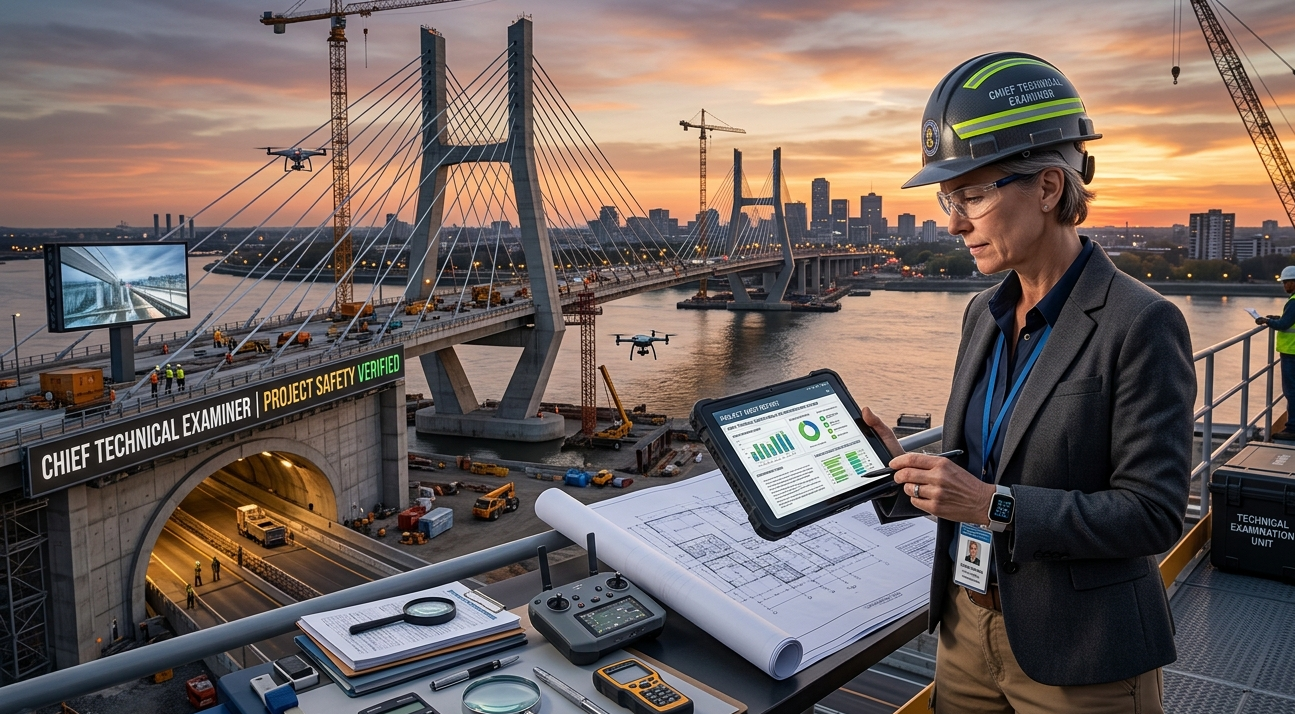
chief technical examiner
The Expert Who Ensures Safety, Quality, and Compliance
When you think about the people who make sure our buildings are safe, our bridges stand strong, and our public projects are built right, you might not know the exact title. But there is a key role behind all of that: the chief technical examiner. This person is the expert who reviews plans, inspects work, and makes sure everything meets the highest standards. The chief technical examiner is like the final guardian of quality. Whether it is a new school, a highway, or a water system, this professional ensures that construction follows the rules and keeps everyone safe. In this guide, we will walk you through everything you need to know about this important job. You will learn what a chief technical examiner does, what skills are needed, how to become one, and why this role matters to every community. Let us dive into the world of technical examination and discover the people who make our world safer.
Chief Technical Examiner
| Job Title | Chief Technical Examiner |
|---|---|
| Industry Sector | Construction, Engineering, Public Works, Government Agencies |
| Primary Role | Reviews technical plans, inspects construction projects, ensures code compliance, and approves or rejects work |
| Key Skills | Deep knowledge of building codes, structural analysis, attention to detail, communication, leadership |
| Typical Employers | City or county building departments, state transportation agencies, engineering firms, large construction companies |
| Education | Bachelor’s degree in engineering, architecture, or construction management; often a master’s or professional license |
| Certifications | Professional Engineer (PE) license, Certified Building Official (CBO), or similar credentials |
| Work Environment | Office for plan review; field for inspections; occasional travel to project sites |
| Median Salary | $85,000 – $120,000+ (Based on location/experience) |
| Job Outlook | Steady demand as infrastructure projects grow and safety regulations evolve |
What Is a Chief Technical Examiner and Why Does This Role Exist?
A chief technical examiner is a highly skilled professional who works mostly in government agencies, engineering firms, or large construction companies. Their main job is to make sure that every technical detail of a project meets the required codes and standards. Think of them as the last checkpoint before a project moves forward. They review blueprints, inspect ongoing work, and decide if a project is safe to proceed. Without a chief technical examiner, mistakes could go unnoticed, and that could lead to serious safety problems later. This role exists because our communities deserve buildings, roads, and utilities that are built correctly. The chief technical examiner brings years of experience and deep technical knowledge to protect public safety. Their work touches almost every construction project you see around you.
Key Responsibilities of a Chief Technical Examiner
The responsibilities of a chief technical examiner are broad and critical. They start by reviewing construction plans and specifications. They look for errors, missing details, or anything that does not match the code. If they find a problem, they send it back for corrections. They also perform field inspections at different stages of construction. They check foundation work, structural framing, electrical systems, plumbing, and more. The chief technical examiner documents every finding and keeps detailed records. They also train and supervise other inspectors on their team. Another big part of the job is interpreting codes. Sometimes the rules are not perfectly clear, and the chief technical examiner must make a judgment call. They also handle appeals when contractors disagree with a decision. In short, they are the top technical authority for any project they oversee.
- Plan Review: Examines architectural and engineering drawings for code compliance.
- Field Inspections: Visits job sites to verify that work matches approved plans.
- Code Interpretation: Clarifies complex building codes for contractors and designers.
- Team Supervision: Leads a team of inspectors and provides guidance.
- Permit Approval: Grants or denies permits based on technical findings.
- Conflict Resolution: Mediates disputes between contractors and inspection staff.
The Skills That Make a Great Chief Technical Examiner
Becoming a chief technical examiner requires a unique blend of hard skills and soft skills. On the technical side, you need a deep understanding of building codes, structural engineering, and construction methods. You also need to know how to read complex blueprints and spot hidden issues. But technical knowledge alone is not enough. A successful chief technical examiner also has strong communication skills. They explain problems clearly to contractors and architects. They write reports that are easy to understand. They also need patience and diplomacy. Sometimes they deliver bad news, and they must do it in a way that keeps projects moving. Leadership is another key skill because they often manage a team of inspectors. A chief technical examiner must be fair, consistent, and willing to listen to different viewpoints. All of these skills combined make them trusted experts in their field.
Education and Career Path to Becoming a Chief Technical Examiner
The journey to becoming a chief technical examiner usually starts with a bachelor’s degree in civil engineering, structural engineering, architecture, or construction management. Many candidates also earn a master’s degree to deepen their expertise. After college, they spend several years working as a field inspector or plan reviewer to gain hands‑on experience. The next big step is obtaining a professional license, such as a Professional Engineer (PE) license. Some also earn certifications like Certified Building Official (CBO) or International Code Council (ICC) certifications. With years of experience and proven skills, they can apply for a chief technical examiner position. It is a role that demands both technical excellence and leadership ability. Continuous learning is also important because building codes change every few years. A chief technical examiner never stops learning.
- Education: Bachelor’s in engineering or architecture (required); master’s (preferred for advancement).
- Experience: 5‑10 years in inspection, plan review, or construction management.
- Licensing: Professional Engineer (PE) license is often mandatory.
- Certifications: ICC certifications, Certified Building Official (CBO).
- Soft Skills: Leadership, communication, conflict resolution, attention to detail.
A Day in the Life of a Chief Technical Examiner
Every day is different for a chief technical examiner. Some mornings start with reviewing a stack of blueprints for a new commercial building. They check structural loads, fire safety systems, and accessibility features. If they find an issue, they write a clear correction notice for the architect. Later, they might visit a construction site to inspect the foundation before concrete is poured. They measure rebar spacing, check soil compaction, and verify that everything matches the approved plans. After lunch, they might meet with a contractor who has a question about a code requirement. The chief technical examiner listens, explains the rule, and helps find a solution. In the afternoon, they hold a team meeting to discuss new code updates and review inspection reports from the field. Every day combines desk work, site visits, and problem‑solving. It is a role for people who enjoy variety and responsibility.
Why the Role of Chief Technical Examiner Is Critical for Public Safety
Public safety depends on the work of a chief technical examiner. Every year, thousands of construction projects happen in cities and towns. If even one building has a structural flaw or a fire safety issue, people could get hurt. The chief technical examiner prevents that by catching problems before they become dangerous. They make sure that materials meet strength requirements, that electrical systems are properly grounded, and that emergency exits are correctly placed. They also verify that contractors are following the approved plans, not cutting corners. When you walk into a school, a hospital, or an office building, you can feel safe because a chief technical examiner has done their job behind the scenes. It is a role that does not seek attention, but its impact is felt by everyone. Without them, our built environment would be much riskier.
How a Chief Technical Examiner Works with Architects and Contractors
A chief technical examiner does not work in isolation. They are a key partner to architects, engineers, and contractors. When a project is in the design phase, the chief technical examiner may meet with the design team to explain code requirements. This early collaboration saves time and money later. During construction, the chief technical examiner communicates regularly with the contractor. They point out issues and explain what needs to be fixed. A good chief technical examiner is firm but fair. They want the project to succeed, but they will not compromise on safety. Contractors often appreciate this clarity because it helps them avoid costly rework later. The relationship between a chief technical examiner and the construction team is built on mutual respect. When everyone works together, the result is a high‑quality project that meets all standards.
The Challenges a Chief Technical Examiner Faces
Being a chief technical examiner comes with its share of challenges. One of the biggest is managing tight construction schedules. Contractors often feel pressure to finish quickly, but the chief technical examiner must ensure that safety is never rushed. This can lead to tense conversations. Another challenge is keeping up with ever‑changing building codes. New materials and construction methods appear all the time, and the chief technical examiner must stay current. They also face the challenge of limited resources. Many inspection departments are understaffed, yet the workload is high. A chief technical examiner must prioritize and manage time wisely. Despite these challenges, most people in this role find it deeply rewarding. They know their work makes a real difference in the community.
- Time Pressure: Balancing thorough inspections with fast‑paced project timelines.
- Code Complexity: Mastering hundreds of pages of technical regulations.
- Resource Constraints: Doing more with limited staff and budgets.
- Conflict Management: Handling disagreements with contractors and developers.
- Continuous Learning: Staying updated on new technologies and materials.
How to Prepare for a Career as a Chief Technical Examiner
If you are interested in becoming a chief technical examiner, start early. Focus on math and science classes in high school. Look for opportunities to learn about construction, maybe through a summer program or a part‑time job at a construction site. In college, choose a major like civil engineering or construction management. While you study, try to get internships with building departments or engineering firms. After graduation, look for entry‑level jobs as a building inspector or plan reviewer. Work hard, learn from experienced colleagues, and pursue professional certifications. Many successful chief technical examiner professionals also seek mentorship from someone already in the role. Networking through organizations like the International Code Council (ICC) can open doors. With dedication and a commitment to safety, you can build a fulfilling career in this field.
The Future of the Chief Technical Examiner Role
The role of the chief technical examiner is evolving with technology. New software tools allow for digital plan review, making the process faster and more efficient. Drones are being used for site inspections, giving examiners a bird’s‑eye view of hard‑to‑reach areas. Building Information Modeling (BIM) helps the chief technical examiner see a project in 3D before a single shovel hits the ground. As cities grow and infrastructure ages, the demand for skilled technical examiners will remain strong. There is also a growing focus on sustainability and green building. The chief technical examiner of the future will need to understand energy codes and environmentally friendly materials. The job will continue to be vital as long as we build things. It is a career with stability, purpose, and room to grow.
Frequently Asked Questions About Chief Technical Examiner
1. What is a chief technical examiner?
A chief technical examiner is a senior professional who reviews construction plans and inspects projects to ensure they meet building codes and safety standards. They often supervise a team of inspectors and serve as the final technical authority.
2. What qualifications do I need to become a chief technical examiner?
You typically need a bachelor’s degree in engineering or architecture, several years of inspection experience, and a professional license such as a Professional Engineer (PE) or Certified Building Official (CBO). Strong leadership and communication skills are also essential.
3. How much does a chief technical examiner earn?
Salaries vary by location and experience, but the range is usually between $85,000 and $120,000 per year. In larger cities or with extensive experience, earnings can be higher.
4. Is the job of a chief technical examiner stressful?
It can be challenging because of tight deadlines, complex codes, and occasional conflicts with contractors. However, many professionals find the work rewarding because they protect public safety and see tangible results from their efforts.
5. Do chief technical examiners work only for the government?
Many work for city or county building departments, but they can also be employed by large engineering firms, construction companies, or private consulting agencies that offer inspection services.
6. How does technology affect the role of chief technical examiner?
Technology makes the job more efficient. Digital plan review, drones for inspections, and 3D modeling help examiners spot issues earlier and communicate more clearly with design teams. Staying current with tech is becoming an important part of the role.
Conclusion: The Unsung Heroes of Safe Communities
The chief technical examiner may not be a household name, but their work touches every part of our daily lives. From the office where you work to the bridge you cross, their expertise ensures that these structures are built to last. They combine deep technical knowledge with a passion for public safety. They stand firm when safety is at stake, and they guide projects toward successful completion. If you are considering a career in construction, engineering, or public service, the path to becoming a chief technical examiner offers purpose, respect, and the chance to make a lasting impact. And for those who are just curious about how our world stays safe, now you know the vital role behind the scenes. Next time you see a construction site, remember the chief technical examiner who helps make sure everything is done right.
| Read More Informative Blogs Like This. Tap Here 👉 Ultimate Guide To Txmyzone: Boost Your School Success |
About the Author
